Pop Pop Bunny!
Pop Pop Bunny (PPB) started out as what was essentially an internal Pahdo Labs game-jam to explore what it was like to make a mobile game. Over the course of an intense two week grind, the first version of the app was born! I would pause work on this to focus on our main game Starlight Revolver (SRV), and it would later make a re-appearence as a mini-game inside of SRV. While SRV was in development, PPB 1.0 received a lot of positive reception and feedback, and it was a huge hit with our friends and family. After the launch of SRV, I got the opportunity to resume work on Pop Pop Bunny and the freedom to expand on it in order to monetize it. New mechanics! New game modes! Farming?! The possibilities were endless, and I was ecstatic to explore them in creating Pop Pop Bunny 2.0.
Pop Pop Bunny 1.0 Design
—Plzgivemeaanswer, A satisfied playerI've been playing Pop Pop Bunny for a few weeks now, and I'm absolutely impressed with the physics and mechanics of this game. As a fan of Suika games, I can confidently say that this one sets a high bar. The merging puzzles are brilliantly designed – challenging enough to keep you thinking, but not so hard that you feel overwhelmed. It's a rare find in the app store that combines mental stimulation with such satisfying gameplay. What's really exciting is that the bunny order is the same for all players, making the competition feel fair and exhilarating. Highly recommend for puzzle enthusiasts!
In PPB 1.0, there are 11 different bunnies that are progressively larger in size. The player is given a random smaller sized bunny to drop into the board. When two bunnies touch, they merge into a larger bunny and points are scored. When the bunnies overflow out the top of the board, the game is over. This is pretty much what defines the game known as "Suika".
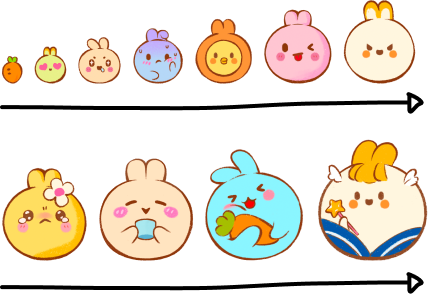
Suika Progression
Inspired by daily games like Wordle and Connections, PPB's main twist on the genre was that I made 28 unique levels or puzzles with pre-arranged bunnies on the board and everyday players would all compete and play the same level, with the same RNG (randomness) and same set of bunnies. Some of the levels were carefully arranged to be in particular patterns, and some of them were more or less random with some pre-placed powerups. As opposed to a blank board, these levels meant players also needed to manage how best to deal with the existing bunnies on the board.
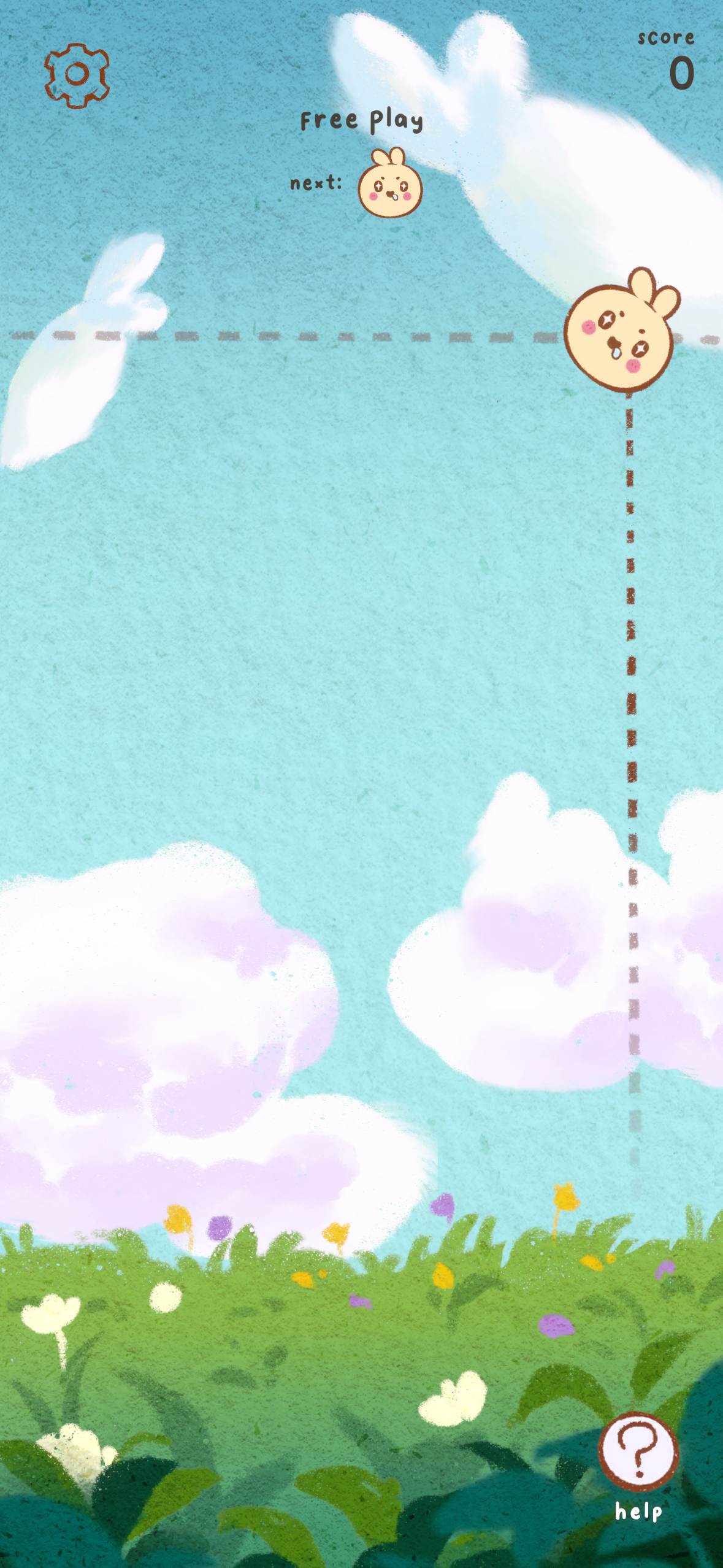
Blank Board
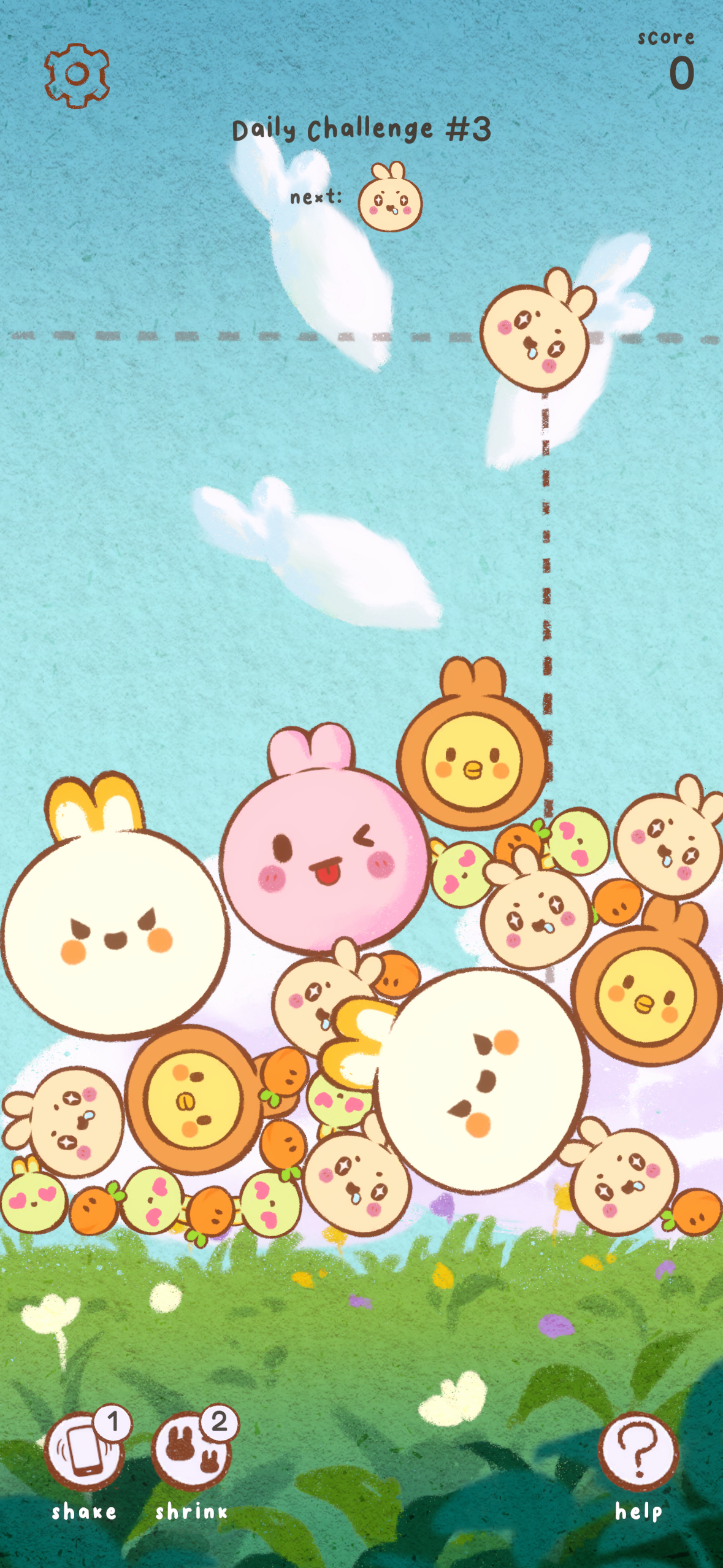
Daily Challenge Level
I created powerups that could be activated in-game. Undo which could rewind time and correct a mistake. Boom which could cause a bunny to explode and jiggle the board for those "they're so close to touching!" moments, as well as remove bunnies from the board instead of merging into a new one. To achieve the board jiggling effect and make the explosion feel satisfying, I made the explosion apply an entirely unrealistic upward force on the surrounding bunnies.
It took a good amount of tuning to make the physics feel satisfying and have just the right amount of bounce and weight. I wanted bunnies to be able to push other bunnies, so while it was counter-intuitive to me, having all of the bunnies including the largest ones all be the same mass was crucial to achieving this. The bunnies are also given a "push" down when dropping to give them some more impact power when hitting another bunny.
At this point, there was also single alternate set of bunnies available for purchase as a cosmetic for $0.99 USD as a test to see how many people would purchase something like this.
2.0 Design: Campaign Mode
For PPB 2.0, the ultimate goal was to monetize it. After all, we couldn't keep adding features to the game forever without a way to justify the development cost. The plan was to keep what worked and expand on it. People liked the physics and game feel, they loved the art and the whimsical feel of the game, they liked the puzzles from the Daily Challenge, and the competitive aspect of it.
We could've added more paid cosmetics to the game, but the number of people that bought our existing cosmetic was too low for us to have a lot of confidence in this route. We could've added pay-to-win features to the game, but we didn't want to compromise the competitive nature of the game. My answer to this was to add a new Campaign Mode with progression, a less-competitive mode that we could freely monetize while keeping the Daily Challenge intact.
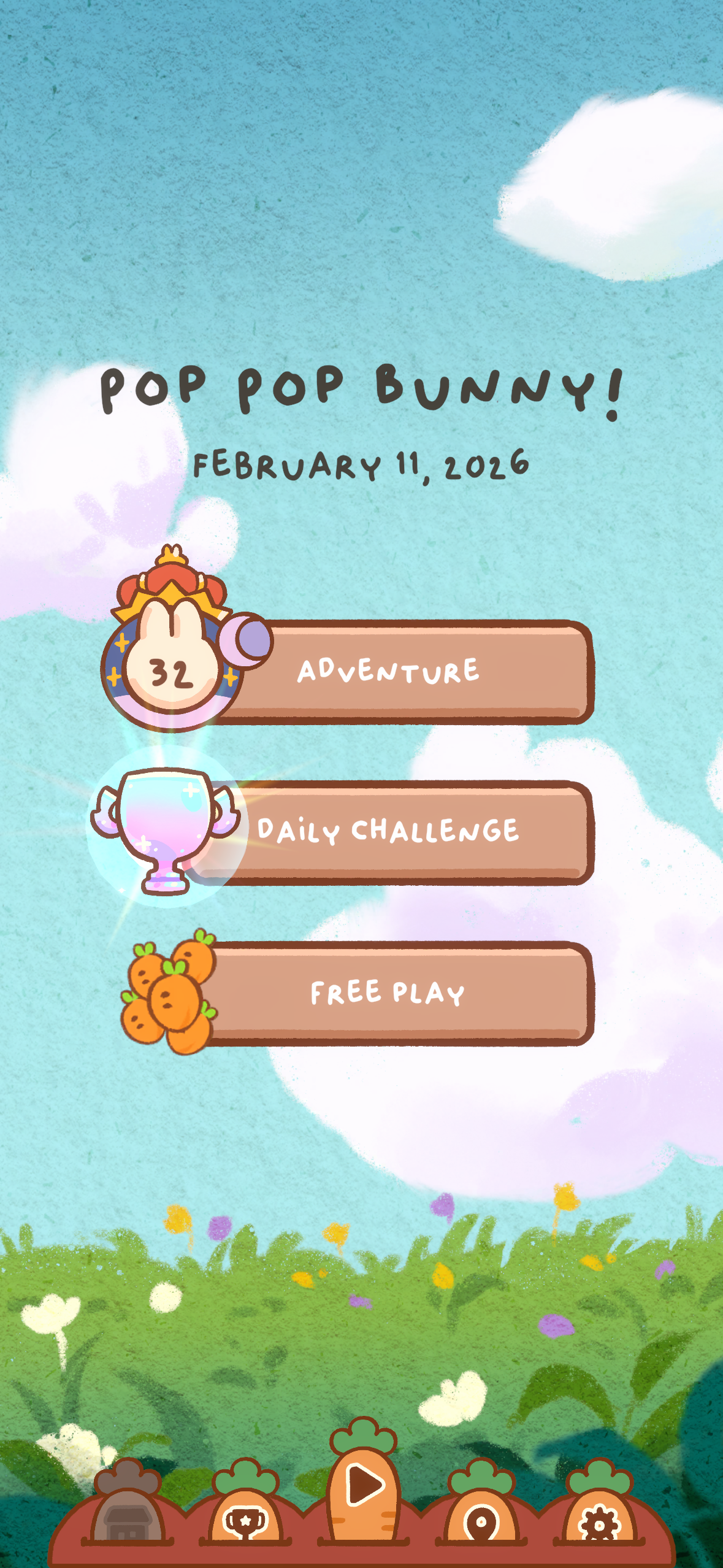
PPB Game Modes
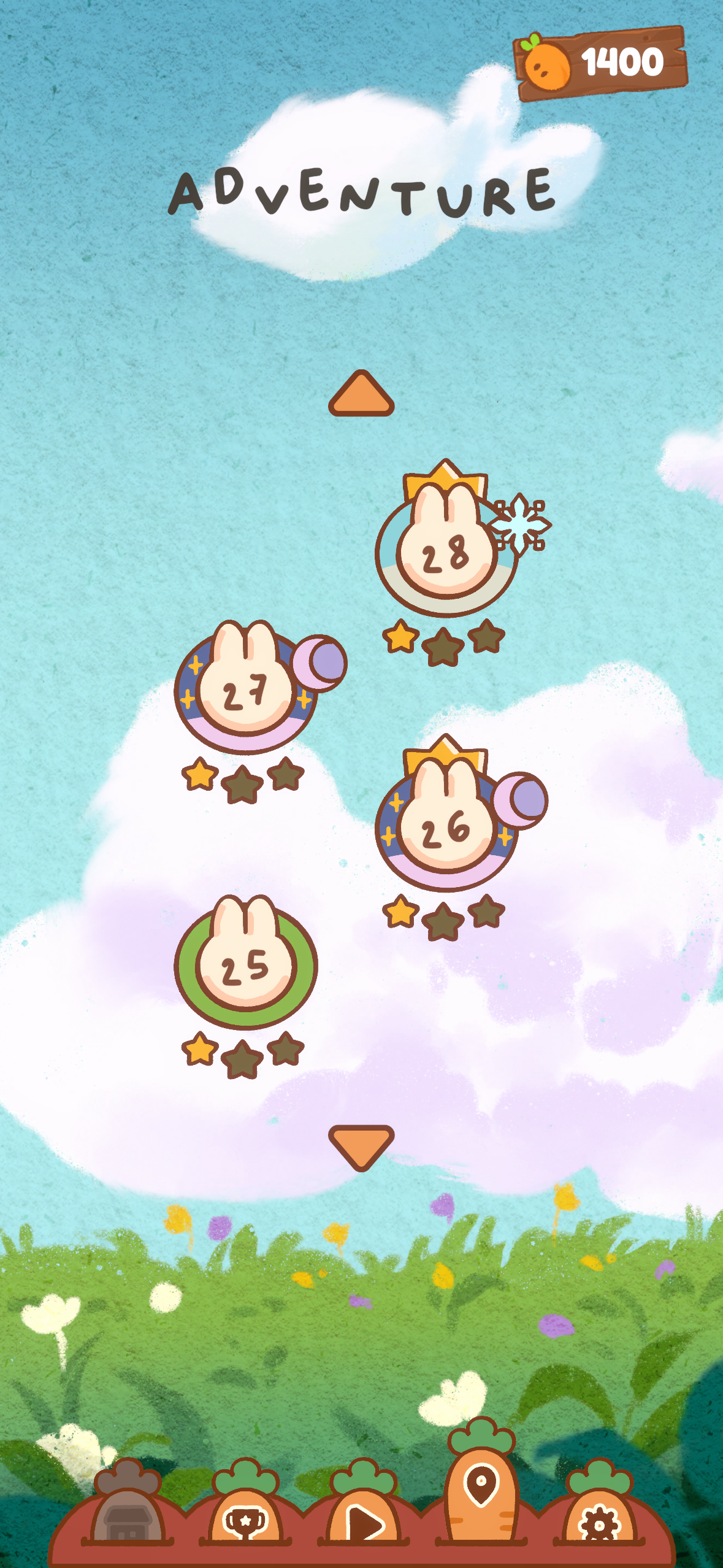
Campaign aka "Adventure" Mode
I created scoring goals for each level, such that a player could pass levels with relative ease, but needed to either expend powerups in order to achieve two & three star goals or become really good at the game. As an additional motivation, each goal achieved would reward currency that players could use to purchase more powerups. Each level also had its own leaderboard, so a motivated player could bank up powerups to try to place high on the rankings.
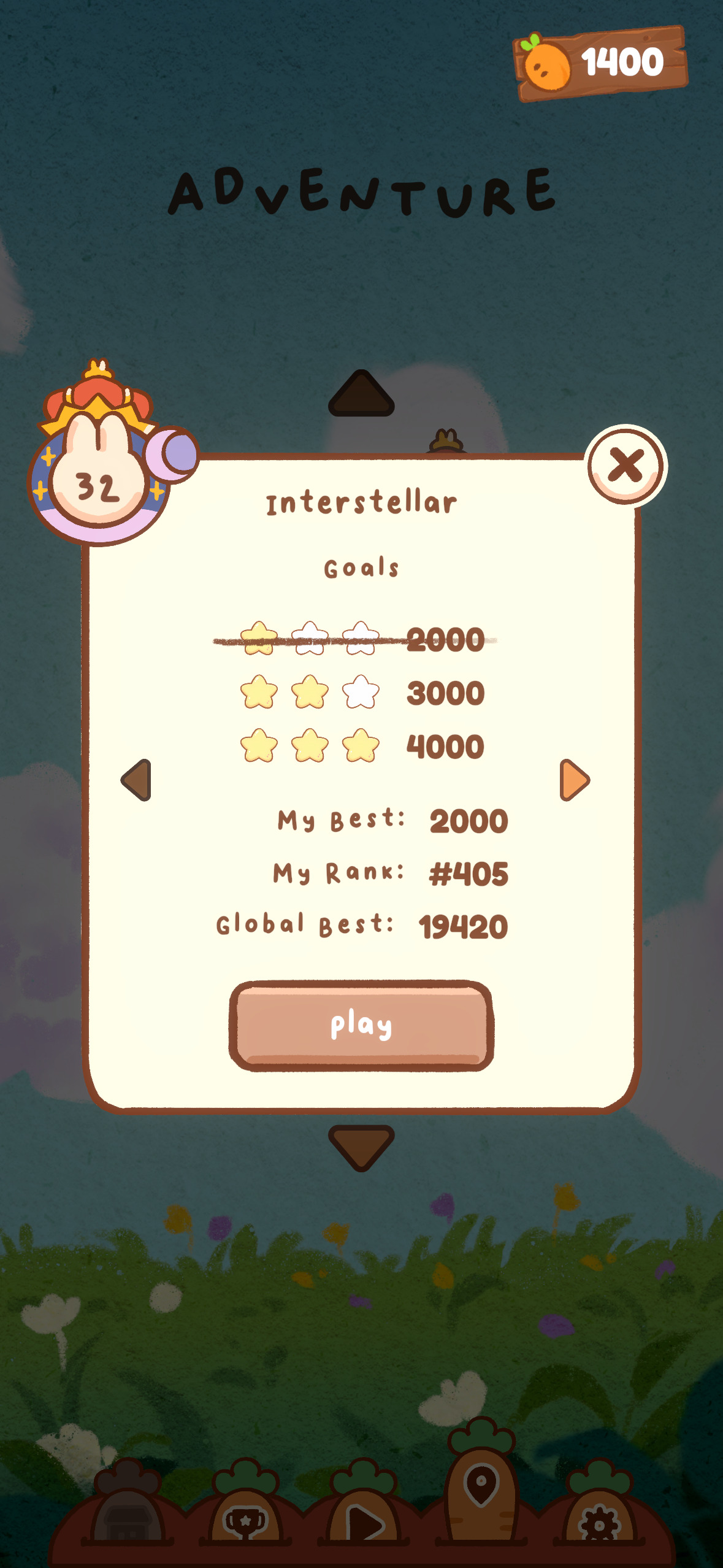
Intra-level Goals
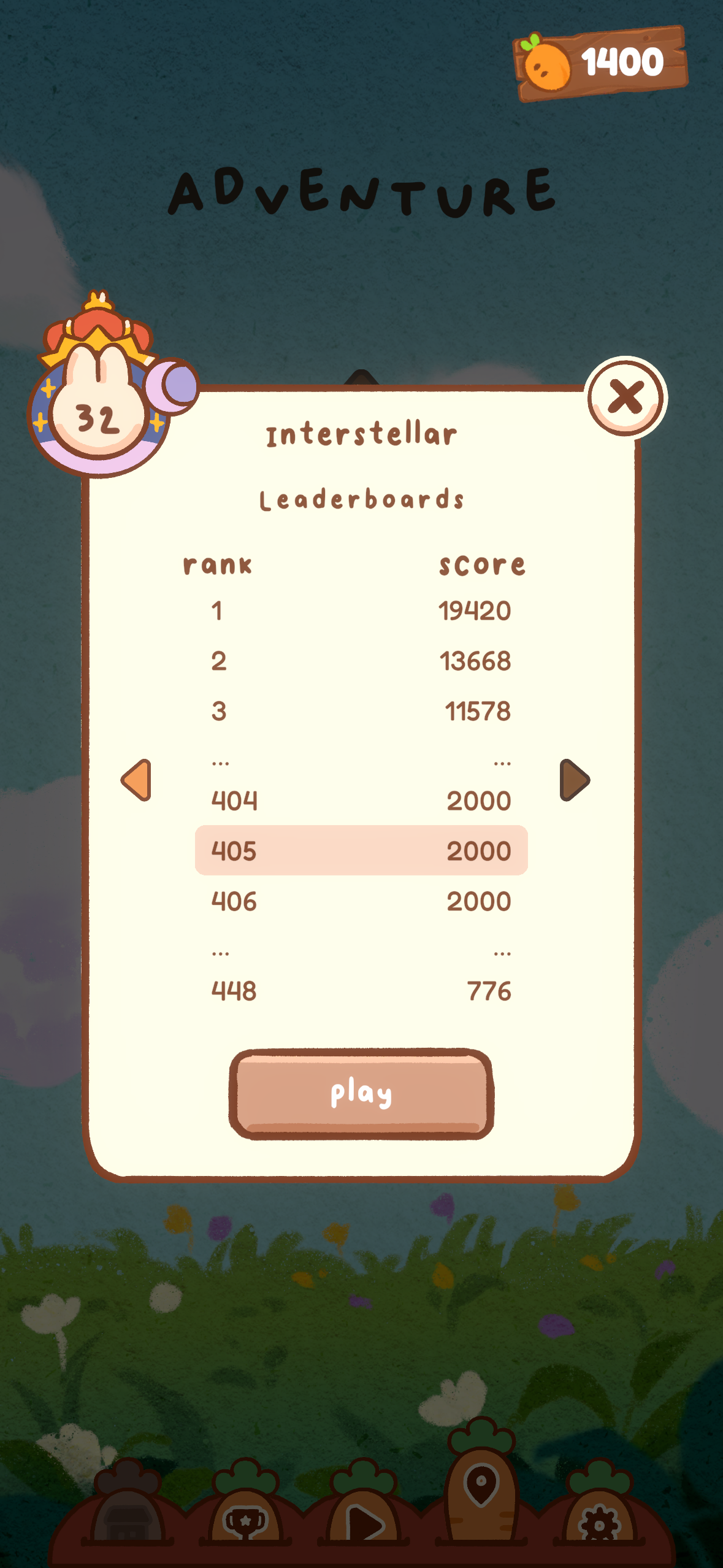
Per-level Leaderboards
To sell the feeling of progression, I designed two additional biomes (three total), each visually distinct and with their own unique themed mechanics. As the players advanced through the 32 campaign levels, they would gradually be exposed to new mechanics and progressively more challenging versions of them.
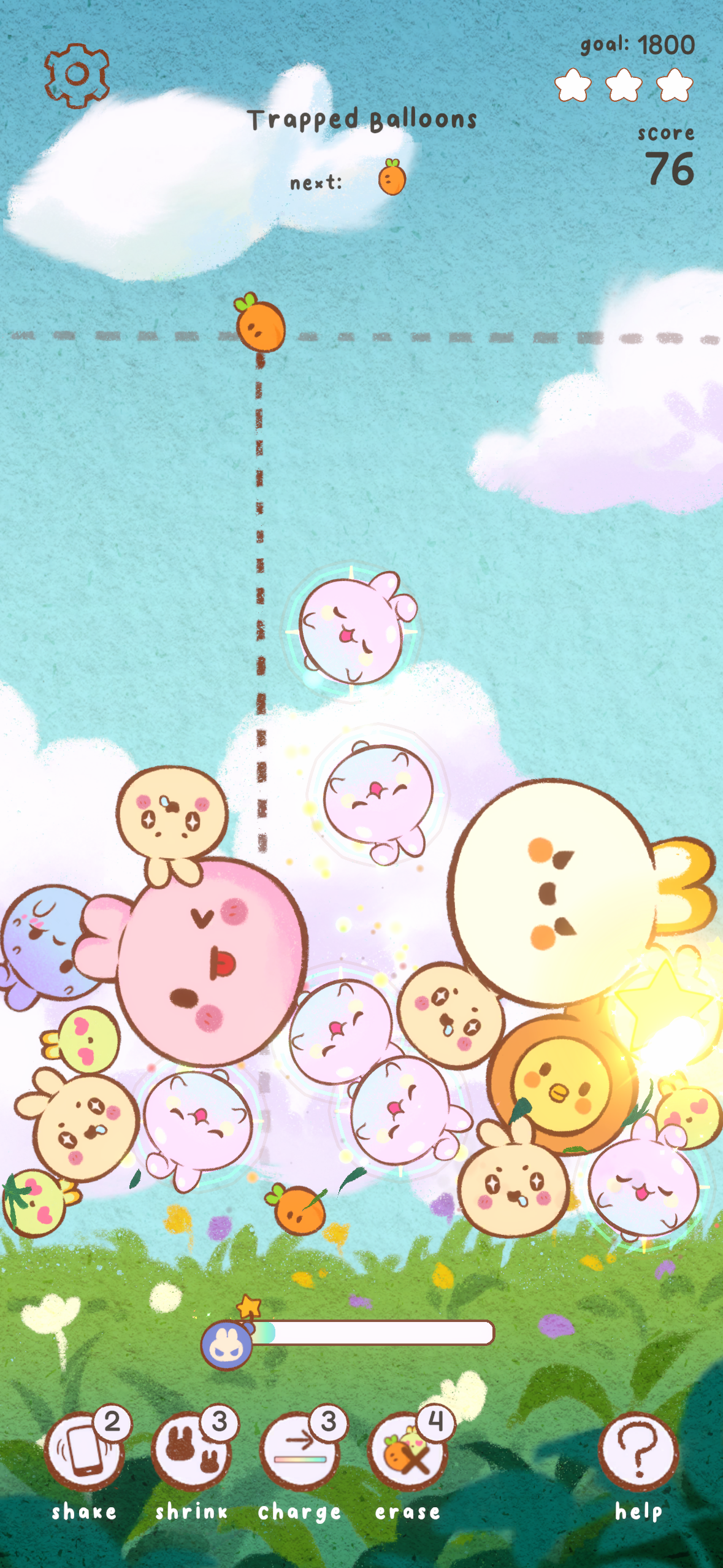
Meadow Biome
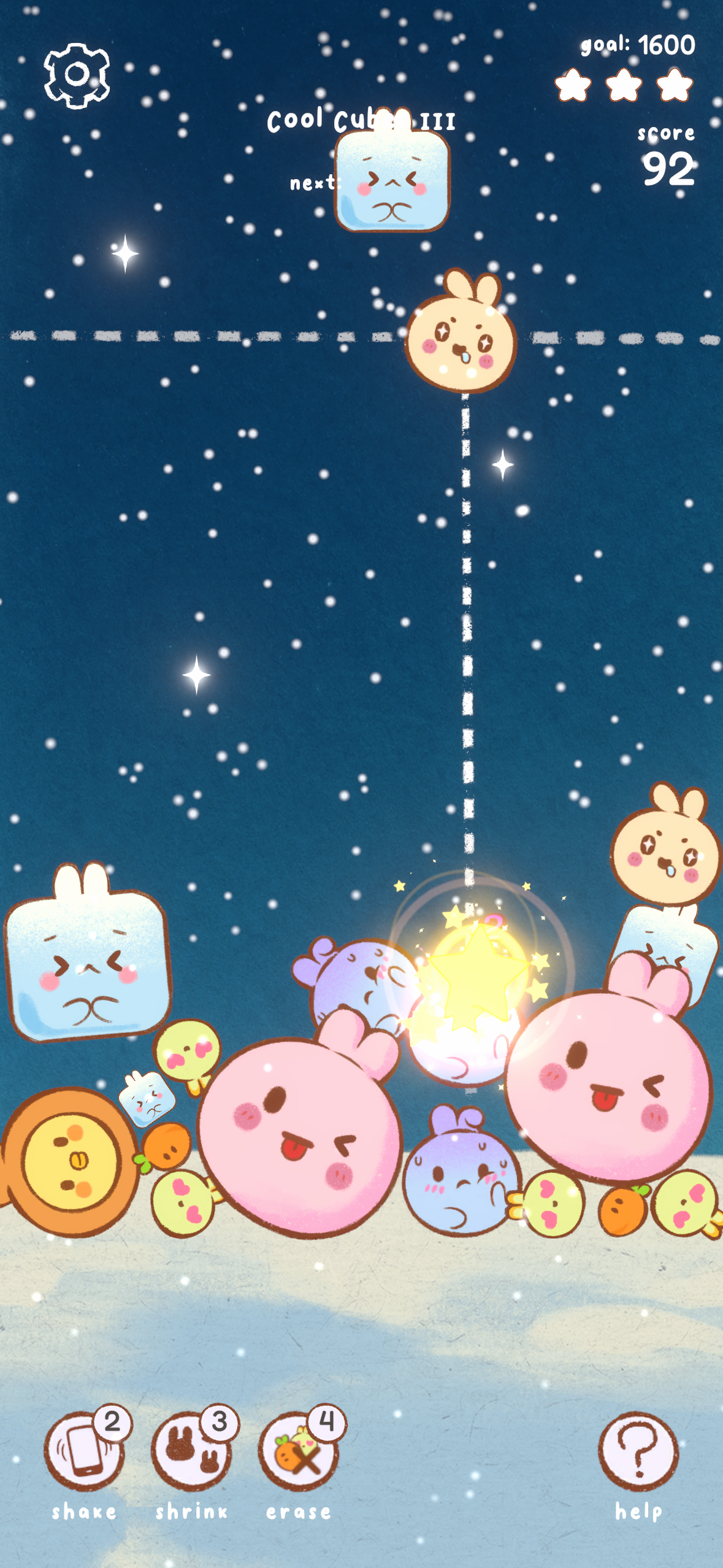
Winter Biome
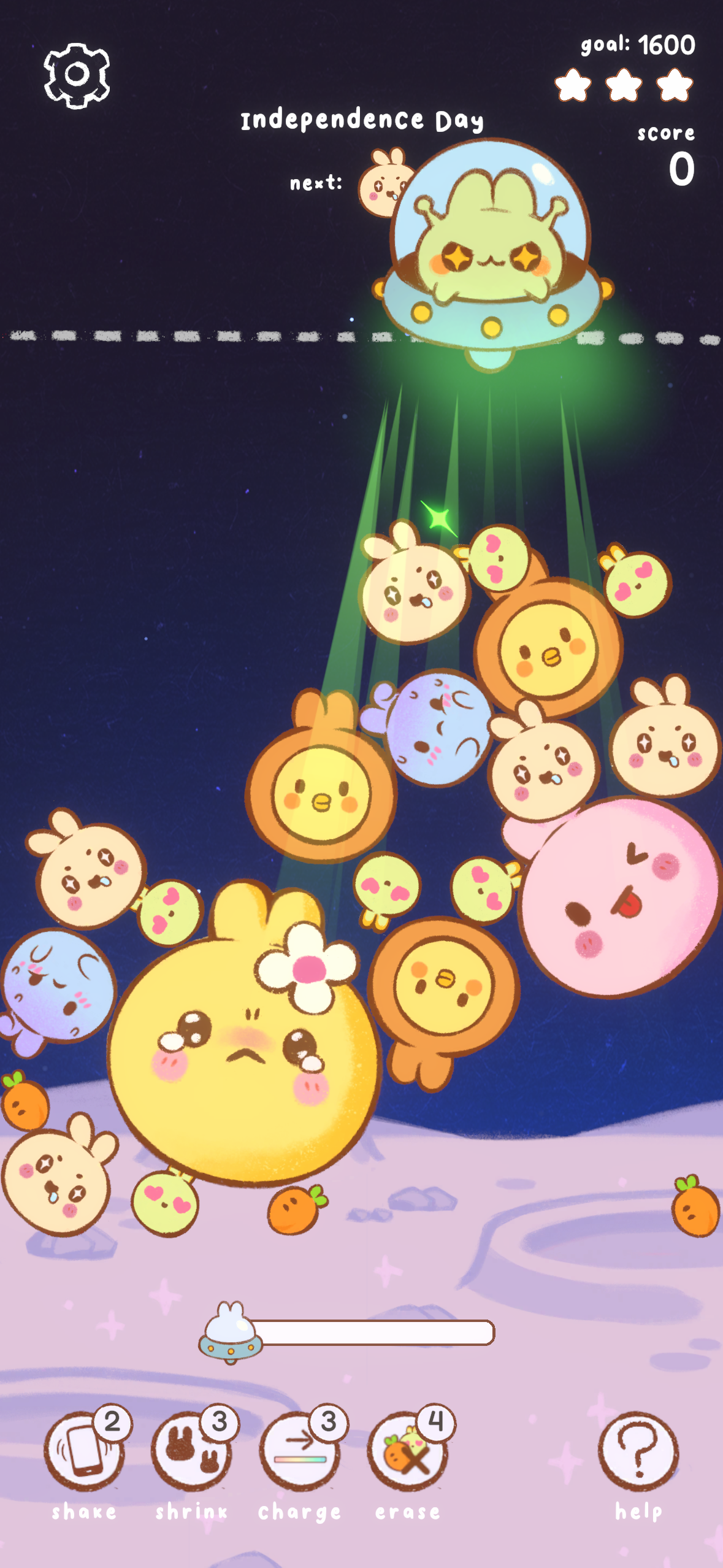
Space Biome
2.0 Design: Mechanics
Player feedback was crucial to my development of new mechanics. Fortunately, I had a pool of dedicated PPB 1.0 players that would prove to be incredibly helpful. Here are some of my observations and learnings from several cycles of prototyping and iteration...
Mechanics that happened randomly to the player reduced player agency by taking control away from them. For Pop Pop Bunny, this mattered because a lot of the fun was in constructing a strategy and setting yourself up for success later. Random events, while introducing variation and forcing players to re-strategize, could disrupt players' previously formed strategies and be frustrating. An early unsuccessful prototype was a blizzard effect that would periodically freeze random bunnies preventing them from being merged. A simple change to instead occassionally freeze the next bunny the player drops was all that was needed to give agency back to the player while still adding strategic complications.
Mechanics that meshed well with PPB's physics-based identity would all be quite effective: bunny mass, bunny shape, physics forces, and collisions. A successful example of this was the Ice Cube Bunny. This was a special bunny that would sometimes spawn and not be mergeable with any other bunny, effectively serving as a moving obstacle that could be placed by the player. Over time, it would get smaller and smaller until it disappeared. The ability to choose where to put it and its predictable behavior of shrinking made it an interesting challenge of how well a player could manage the obstacle instead of feeling unfair.
Frozen Bunnies
Ice Cube Bunny
PPB's default interaction space was limited to the top of the bunnies placed on the board. Bunnies on the bottom of the board were uninteractive, so mechanics that interacted with the bunnies that weren't at the very top were effectively meaningless. This observation led to the Balloon Bunny which would spawn from the bottom of the screen instead of the top. It would expand over time and pop! allowing players to interact with and displace bunnies at the bottom of the board. In a similar vein, Teleporting Bunny would allow players to spawn in a bunny anywhere, and the displacement from spawning the bunny could be used very effectively.
Balloon Bunny
Teleporting Bunny
One of the challenges I faced was that I needed powerups to be strictly positive and powerful because we wanted to eventually monetize them. Some ideas for mechanics we had were either not powerful or reliable enough to be a powerup, but also wouldn't be fun to always have them happening as part of the level. For example, the UFO mechanic originally started out as an event that randomly happened periodically. However, while it was interesting and had merit as a mechanic, it was way more fun to have happen in the mid-game, rather than the early or late game. The breakthrough idea I had was taking Overwatch's Ultimate Ability and applying it to this game. As players earned score by playing normally, they would charge a meter. Once the meter was full, the player could decide whether or not to activate it and when. This opened up the door for me to experiment with more ideas that were wacky but fun, or only situationally useful like flipping the entire board.
UFO
Flip
The ability to Continue playing after losing was initially a strong contender as a powerup, but actually turned out to be way too powerful to where it made the game less fun. Despite introducing currency so that I could adjust the in-game pricing of powerups to account for their power, even if Continue costed a lot more, the optimal way to play would be to save up currency to purchase a Continue powerup instead of using more of the weaker powerups which was a much less fun way to play the game. I thought that once we added monetization, that it would be acceptable to sell the ability to Continue directly for a small monetary price, but it could not be balanced if players could save up in-game currency to purchase it. In the end I made the decision to cut it from PPB 2.0 because due to lack of funding the studio was unfortunately shut down before I could add monetization and other planned features.
2.0 Design: Level Editor
After all the mechanics were in place, I created an in-game level editor where I could simulate gameplay at fast speeds to randomly seed the board, or carefully place bunnies in any particular arrangement easily. PPB 2.0 had 60+ hand-made levels and having this editor saved so much time.
Leave a comment